
Can artificial intelligence truly perform the role of a lawyer? Surprisingly, the answer is closer than many think. More than 60% of legal professionals believe that AI increases their efficiency in daily work. In this article, we will explore what an ai lawyer really is, how it transforms law firms, and which platforms are leading the innovation. You will also learn about the challenges, ethics, and future of AI in law.
What Is an AI Lawyer?
Definition
An ai lawyer is a technology-powered legal system that uses artificial intelligence (AI) and machine learning (ML) to perform tasks that traditionally required human lawyers. This includes document review, legal research, and even predicting case outcomes.
You might also encounter terms like lawyer ai, a i lawyer, ai for law, or legal ai, all of which refer to the same concept of technology-enhanced legal assistance.
Core Capabilities
An AI lawyer can perform several essential functions such as:
-
Contract and document review
-
Legal research and writing
-
Predictive case analytics
-
Client communication and intake automation
According to Harvard’s Center on the Legal Profession, AI tools have reduced complaint drafting time from 16 hours to only 4 minutes.
What It Is Not
An AI lawyer is not a replacement for human attorneys. Ethics and law still require human oversight. Nearly 96% of legal professionals believe full AI representation in court would be inappropriate.
Why AI Lawyers Are Becoming Popular
Efficiency and Cost Savings
Around 65% of law firms believe that adopting AI improves productivity. Studies show up to 44% of legal work could be automated. For law firms, this means more time for strategic tasks and less time spent on repetitive work.
Handling Complex Data
Legal cases often involve massive amounts of data. AI can process thousands of documents faster than any human team, improving accuracy and efficiency.
Client Expectations
Clients now expect law firms to adopt digital innovation. About 82% of lawyers are already using or planning to integrate AI systems into their practice.
Business Model Evolution
Many firms are now experimenting with new models such as fixed pricing or subscription-based services thanks to the efficiency gained through AI.
Key Use Cases for AI in Legal Practice
Document Review and Discovery
AI systems can automatically scan and tag thousands of documents, dramatically reducing the time required for litigation preparation.
Legal Research and Drafting
Platforms like Lexis+ AI and Casetext CoCounsel can draft legal documents, generate case summaries, and suggest edits based on precedent databases.
Predictive Analytics
AI tools like Lex Machina analyze previous cases to predict outcomes and guide lawyers in forming better strategies.
Client Intake and Chatbots
Small law firms use AI chatbots to automate client intake, answer questions, and prepare standard legal forms.
Workflow Assistance
AI tools act as digital assistants, helping human lawyers make faster and more informed decisions. As Harvey AI’s creators emphasize, the future of AI in law is about collaboration, not competition.
Top AI Lawyer Tools and Platforms
1. AI Lawyer Pro
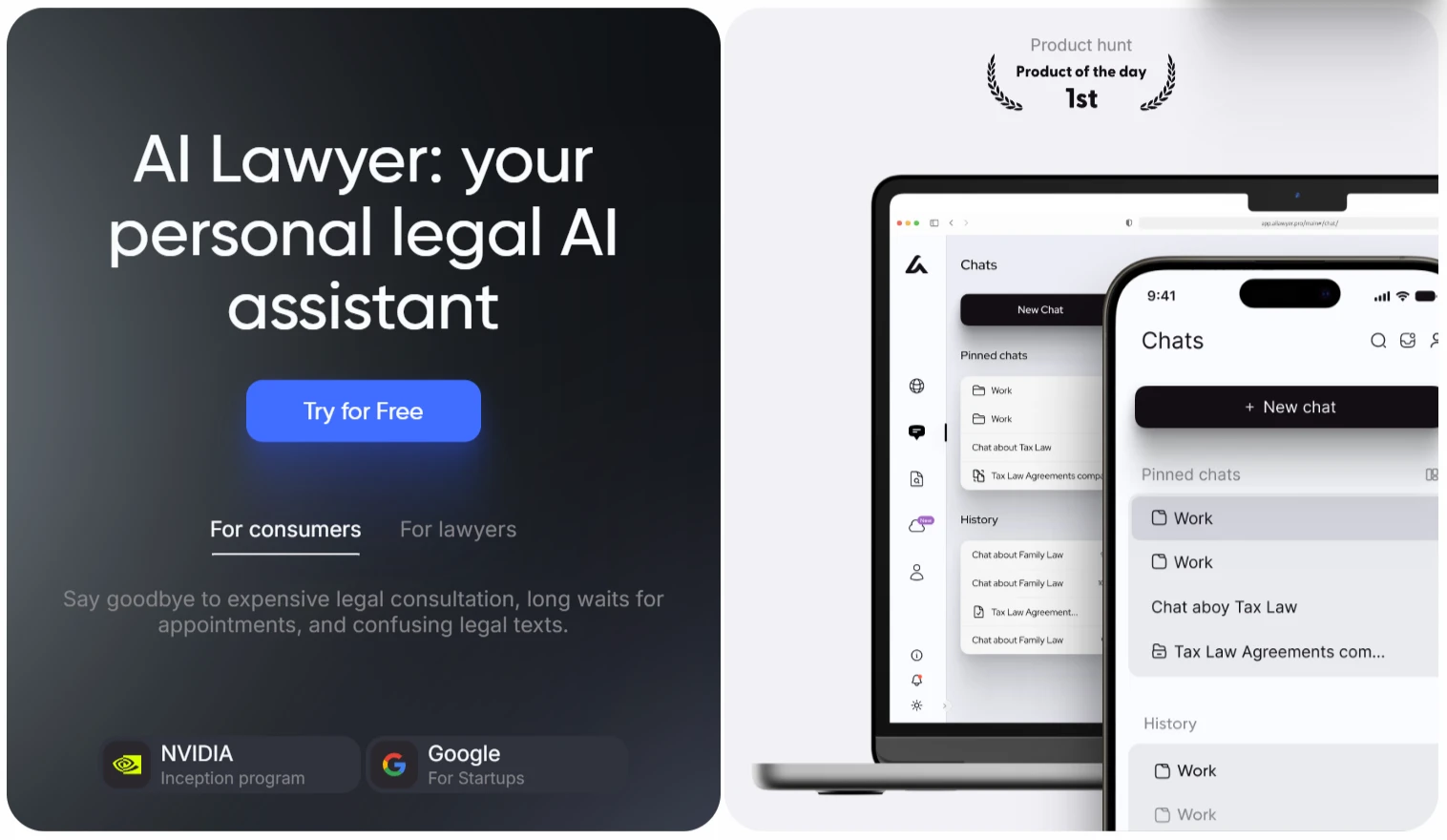
AI Lawyer Pro is an advanced platform designed to help law firms automate document drafting, review, and research through natural language processing. It focuses on simplifying legal workflows and improving speed.
Pros:
-
User-friendly dashboard and intuitive interface
-
Customizable templates for legal documents
-
Strong AI-driven summarization and clause detection
Cons:
-
Limited integrations with third-party legal databases
-
Less suitable for complex litigation analysis
Why it matters for AI Lawyers:
AI Lawyer Pro helps both individual lawyers and firms streamline repetitive legal tasks, improving overall efficiency and accuracy in client work.
2. Harvey AI

Harvey AI is a cutting-edge generative AI platform created specifically for legal professionals. Backed by OpenAI and PwC, it assists in research, drafting, and summarizing legal content at enterprise scale.
Pros:
-
Trusted by global law firms like Allen & Overy and PwC
-
Built with strong data privacy and compliance standards
-
Generates case summaries and legal drafts in seconds
Cons:
-
Enterprise pricing may not fit smaller firms
-
Requires internal training for best results
Why it matters for AI Lawyers:
Harvey AI represents how AI Lawyers are redefining high-end legal research, offering both precision and scalability for modern law firms.
3. Lexis+ AI (Developed by LexisNexis)
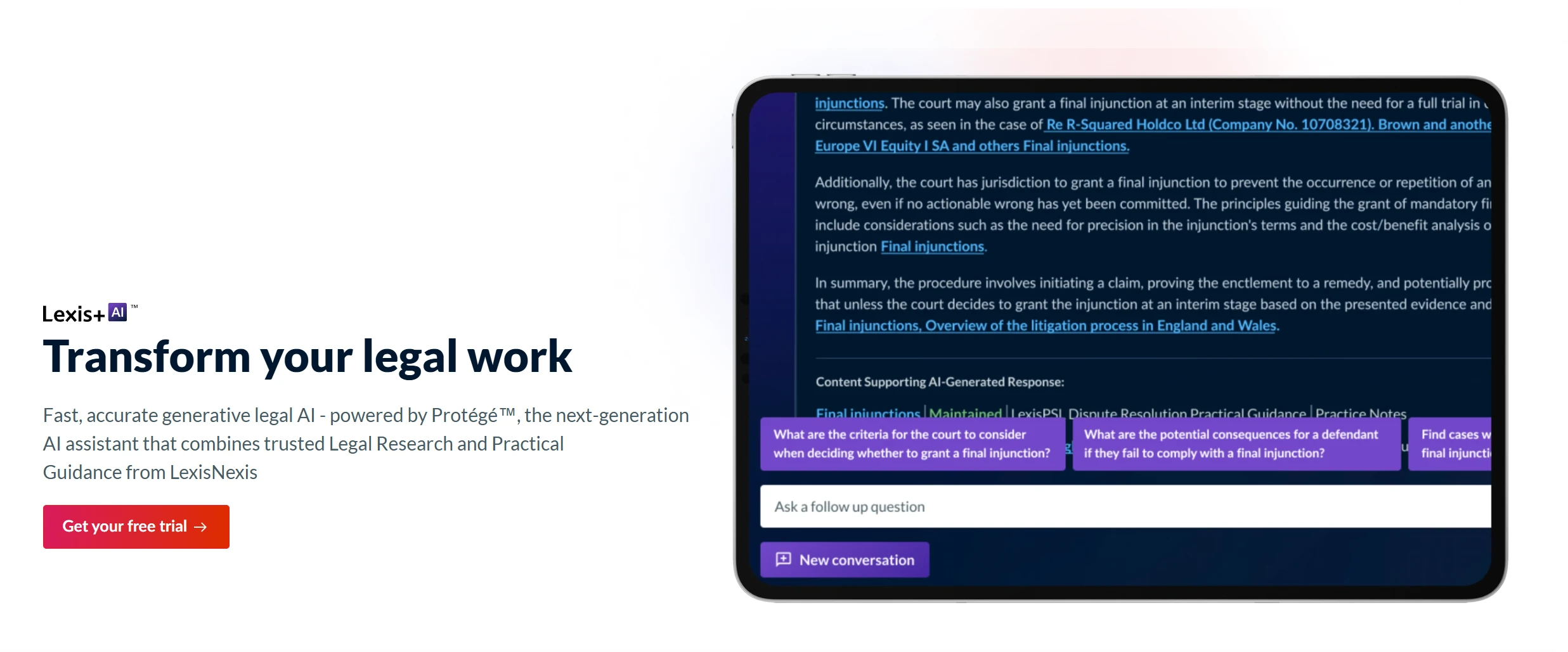
Lexis+ AI integrates LexisNexis’ vast legal research database with generative AI to create a seamless environment for drafting, research, and legal analysis.
Pros:
-
Backed by LexisNexis’ authoritative data and case law library
-
Excellent citation validation and accuracy
-
Designed for professional compliance and reliability
Cons:
-
Requires subscription to the Lexis+ ecosystem
-
Less customizable compared to open AI systems
Why it matters for AI Lawyers:
Lexis+ AI demonstrates how trusted publishers empower AI Lawyers to access verified, up-to-date legal data with speed and confidence.
4. Casetext CoCounsel

Casetext CoCounsel, now part of Thomson Reuters, uses GPT-based legal intelligence to draft documents, summarize cases, and conduct detailed legal research.
Pros:
-
High accuracy in research and document analysis
-
Integrates seamlessly with existing legal workflows
-
Excellent customer support and training
Cons:
-
Works best within the Thomson Reuters ecosystem
-
May have regional limitations for non-US laws
Why it matters for AI Lawyers:
Casetext CoCounsel enhances how AI Lawyers perform due diligence, giving legal teams faster insights and consistent results.
5. Lex Machina
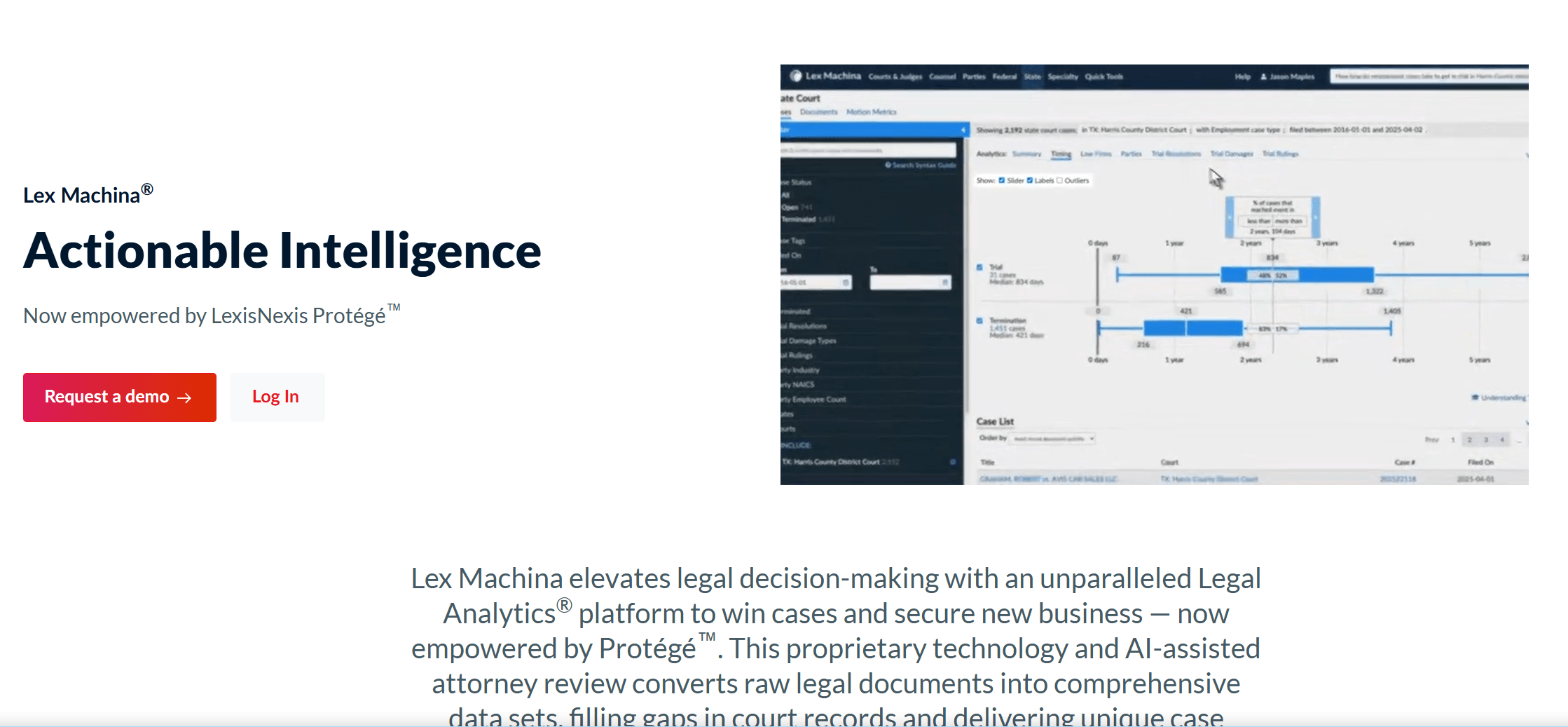
Lex Machina specializes in legal analytics, helping lawyers predict outcomes, track judges’ decisions, and evaluate litigation risks through AI-based data models.
Pros:
-
Deep analytics for litigation strategy
-
Visual dashboards with case trends and comparisons
-
Ideal for data-driven decision making
Cons:
-
Requires analytical knowledge to interpret data
-
Best suited for large firms with litigation focus
Why it matters for AI Lawyers:
Lex Machina empowers AI Lawyers to combine data science with legal strategy, enhancing prediction accuracy and client advice.
6. vLex Vincent AI
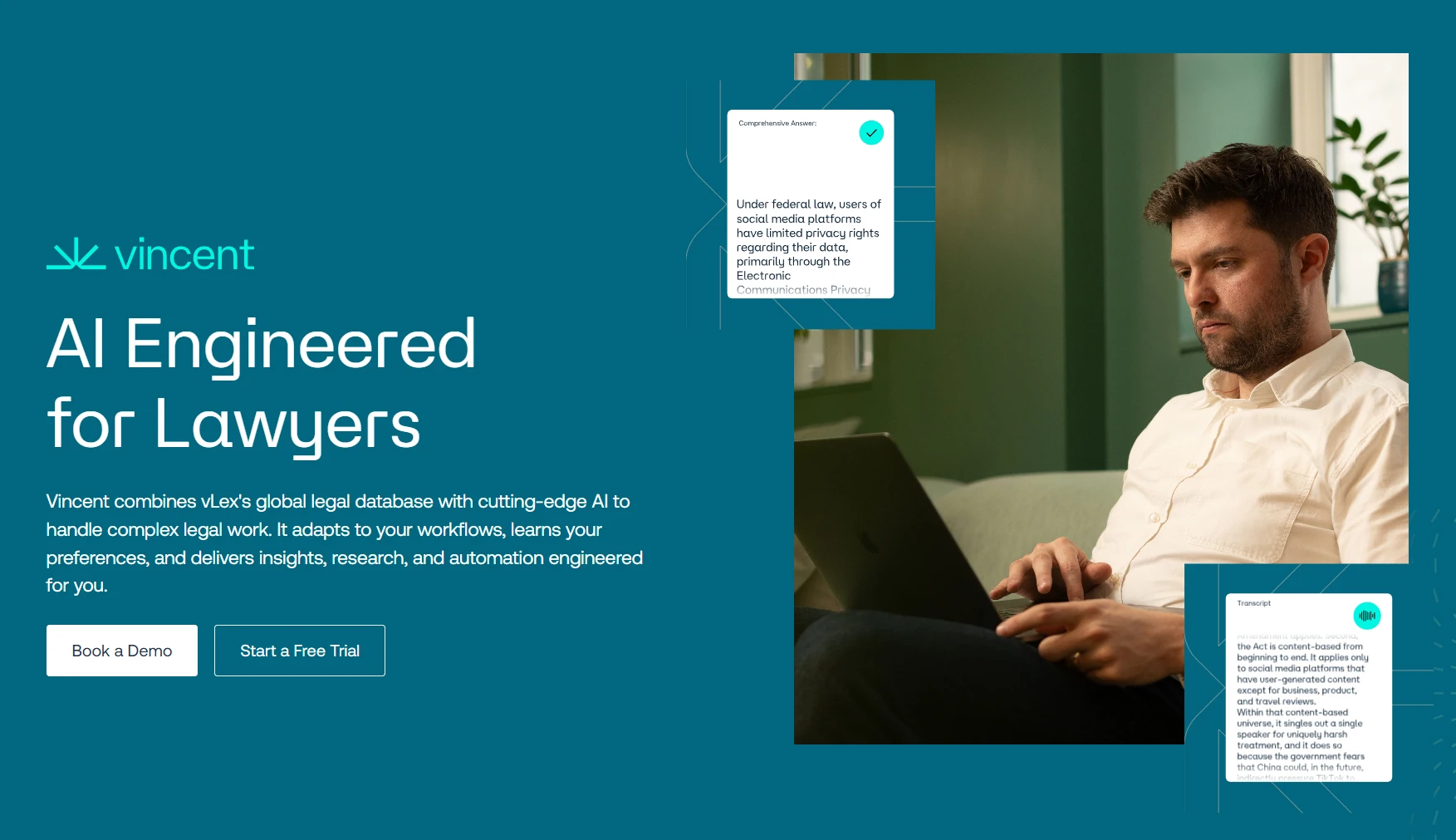
vLex Vincent AI is a multilingual AI platform offering global legal research and document analysis, designed for international and comparative law practices.
Pros:
-
Supports multiple languages and jurisdictions
-
Excellent for cross-border legal research
-
Integrates well with vLex’s global content database
Cons:
-
Requires consistent internet connection
-
May not cover smaller jurisdictions in depth
Why it matters for AI Lawyers:
vLex Vincent AI expands the reach of AI Lawyers to a truly international level, making global legal research faster and more accurate.
7. Hukumonline AIlex
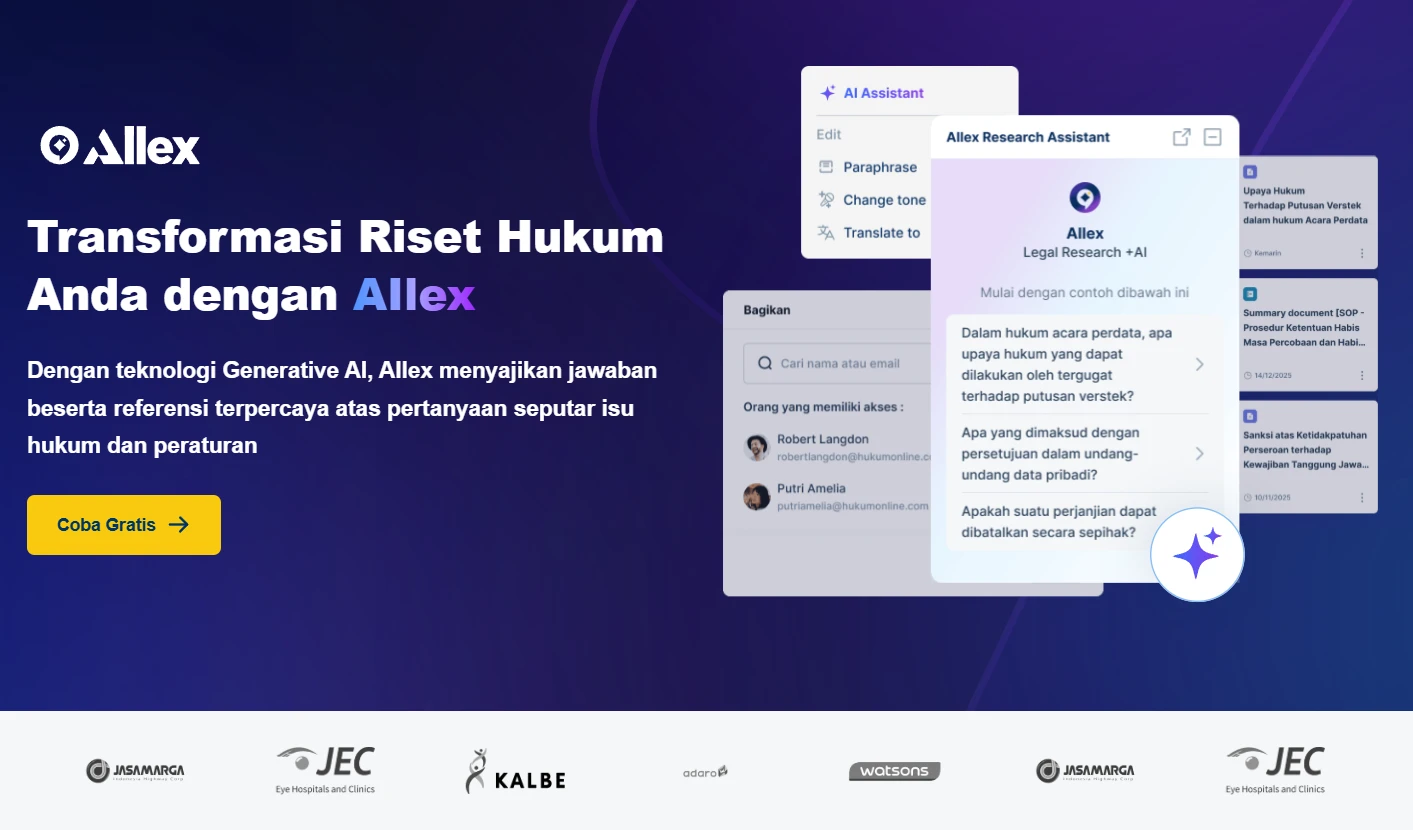
Hukumonline AIlex is an Indonesian legal AI tool created to assist lawyers, corporations, and government agencies in understanding and applying local regulations.
Pros:
-
Tailored for Indonesian law and compliance
-
Strong integration with Hukumonline’s regulatory content
-
Simplifies local legal language for non-experts
Cons:
-
Limited to Indonesian legal system
-
Smaller global data coverage
Why it matters for AI Lawyers:
Hukumonline AIlex shows how AI Lawyers can serve region-specific needs while maintaining accuracy and accessibility for local professionals.
8. Legal Hero
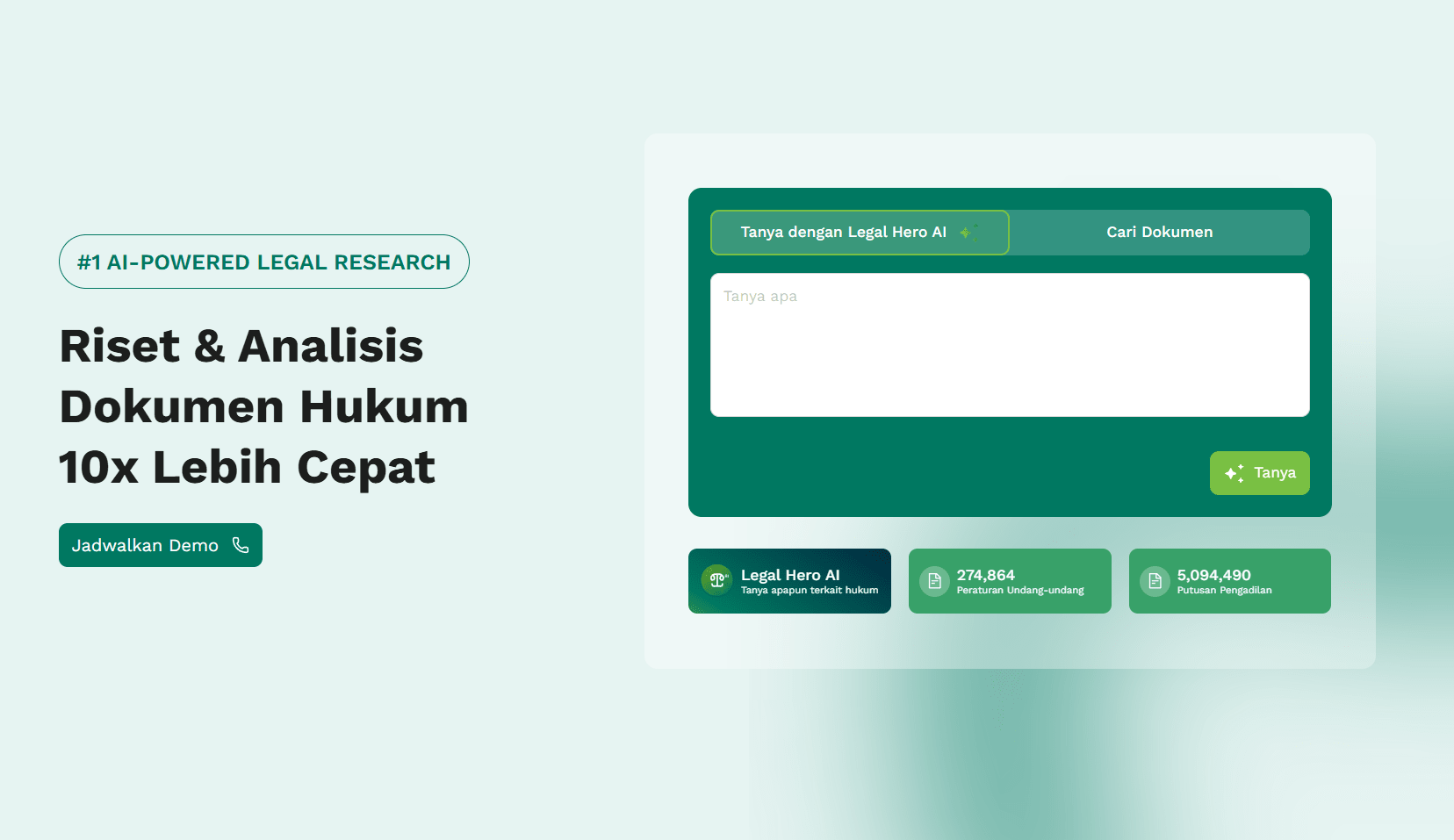
Legal Hero is a flexible legal-tech platform connecting clients and lawyers through AI-powered tools for document creation, case tracking, and automation.
Pros:
-
Affordable for startups and small firms
-
Streamlined client communication system
-
Strong document automation and contract generation
Cons:
-
Limited advanced research capability
-
Fewer features for large corporate law practices
Why it matters for AI Lawyers:
Legal Hero brings AI Lawyers closer to small law firms and individuals by making advanced legal automation accessible and cost-effective.
These AI Lawyers tools represent the growing diversity and strength of artificial intelligence in law. From enterprise solutions like Harvey AI and Lexis+ AI to accessible tools like Legal Hero and Hukumonline AIlex, the legal industry is entering a new era where technology enhances expertise rather than replacing it.
Each platform offers unique advantages depending on your practice size, jurisdiction, and goals. Choosing the right AI Lawyers platform can help firms save time, boost accuracy, and deliver more value to clients.
Challenges and Ethical Concerns
Accuracy Issues
Even advanced AI systems can produce false or misleading results. Research from Stanford shows that legal AI models can still generate incorrect answers 17% of the time.
Human Responsibility
Lawyers remain legally responsible for any work product created with AI assistance. Every AI-generated document must be reviewed and approved by a qualified lawyer.
Data Security
AI systems must handle sensitive client data responsibly. Firms should only use trusted tools with strong encryption and compliance standards.
Bias and Transparency
AI models can reflect bias in the data they were trained on. Lawyers need to apply human judgment to verify outputs and ensure fairness.
Adoption and ROI
Smaller law firms still face challenges in AI adoption due to cost and training needs. According to the American Bar Association, firms with fewer than 50 lawyers have adoption rates below 30%.
Impact on Billing
Increased automation challenges the traditional hourly billing model. Firms must adapt to new pricing structures such as subscription or project-based billing.
How Lawyers Can Adopt AI Responsibly
Identify Suitable Use Cases
Start with repetitive tasks such as contract review or summarizing case files.
Maintain Human Oversight
Always verify AI-generated content. Lawyers must remain accountable for every output.
Develop Internal Policies
Create clear rules for how AI tools are used, reviewed, and monitored within the firm.
Train Teams
Provide ongoing education on how AI works, its limitations, and its ethical implications.
Choose the Right Platform
Select a platform that fits your jurisdiction, workflow, and budget. Compare vendors like Harvey AI or Lexis+ AI to find the right match.
Measure Results
Track time saved, error reduction, and client satisfaction. Use this data to refine your AI strategy.
Conclusion
The rise of the ai lawyer marks a major shift in the legal industry. Artificial intelligence for lawyers can save time, improve accuracy, and offer strategic insights that were once impossible. However, it also requires responsibility, ethical awareness, and human judgment.
For law firms and independent lawyers, this is the moment to embrace the opportunity. Start by integrating one reliable AI tool into your workflow. Experiment with document review or research automation, and always ensure that human review remains central.
Call to Action: Begin a pilot project this month. Test how AI can streamline your tasks, measure the outcomes, and move toward a more efficient and intelligent legal future.
Always consult with a licensed attorney and verify all AI-generated legal content before use in client matters.