Typography plays a crucial role in how people perceive content, brands, and digital products. Fonts influence readability, trust, and emotional response. Unfortunately, many high quality fonts come with expensive licenses that are not affordable for everyone. This is where freeware fonts become extremely valuable.
Freeware fonts allow anyone to access professional looking typography without paying licensing fees. Designers, students, business owners, and content creators can all benefit from using them. However, using freeware fonts without proper knowledge can lead to legal issues or poor design results.
In this article, you will learn what freeware fonts are, why they matter, how to use them correctly, and how to maximize their benefits while avoiding common mistakes.
What Are Freeware Fonts?
Freeware fonts are typefaces that can be downloaded and used for free, either for personal use or sometimes for commercial projects depending on the license.
In simple terms, freeware fonts are fonts that do not require payment to use. They are often created by independent designers who want to share their work with the public. These fonts are commonly used in blogs, presentations, social media graphics, posters, and digital designs.
Unlike paid fonts, freeware fonts come with limitations defined by their licenses. Some allow commercial use, while others restrict usage to personal projects only. Understanding these rules is essential before applying a font to any public or business related content.
Read More : Exploring the Intricacies of Sans and Sans Serif Fonts
Benefits and Reasons to Use Freeware Fonts
- Cost efficiency – Ideal for startups, students, freelancers, and small businesses with limited budgets.
- Wide selection – Thousands of styles are available, including serif, sans serif, script, and display fonts.
- Immediate access – Fonts can be downloaded and used instantly without payment or registration.
- Creative experimentation – Enables designers to test ideas without financial risk.
Freeware fonts help make good design accessible to everyone. You do not need a large budget to create visually appealing content. This is especially helpful for educational projects, nonprofit organizations, and personal brands.
Another key benefit is speed. When working on tight deadlines, freeware fonts remove delays caused by purchasing and licensing processes. This allows faster design iteration and more flexibility.
Read More : 25 Best Fonts for CD Covers That Elevate Album Style
12 Freeware Fonts
Choosing the right typography does not have to be expensive. With the availability of high quality freeware fonts, designers and content creators can achieve a professional visual appearance without paying licensing fees. The following list highlights twelve freeware fonts that are widely used, easy to access, and proven to improve design quality across digital and print projects.
Montserrat – A modern sans serif font with excellent readability, widely used for websites, presentations, and digital products.
Poppins – A geometric sans serif font that feels clean and contemporary, ideal for UI design and marketing visuals.
Roboto – A versatile and highly readable font designed for digital screens, perfect for blogs, apps, and interfaces.
Lato – A balanced sans serif font that combines professionalism with warmth, suitable for business and editorial use.
Playfair Display – A stylish serif font often used for headings, magazines, and elegant branding projects.
Oswald – A condensed sans serif font that works well for headlines, posters, and impactful typography layouts.
Raleway – A minimalist font with refined letterforms, commonly used in modern websites and portfolios.
Bebas Neue – A strong all caps font ideal for titles, banners, and bold visual statements.
Merriweather – A serif font optimized for readability, great for long form content and editorial designs.
Anton – A heavy sans serif font designed for attention grabbing headlines and promotional materials.
Nunito – A rounded sans serif font that feels friendly and approachable, suitable for UI, education, and digital products.
Famulred Font
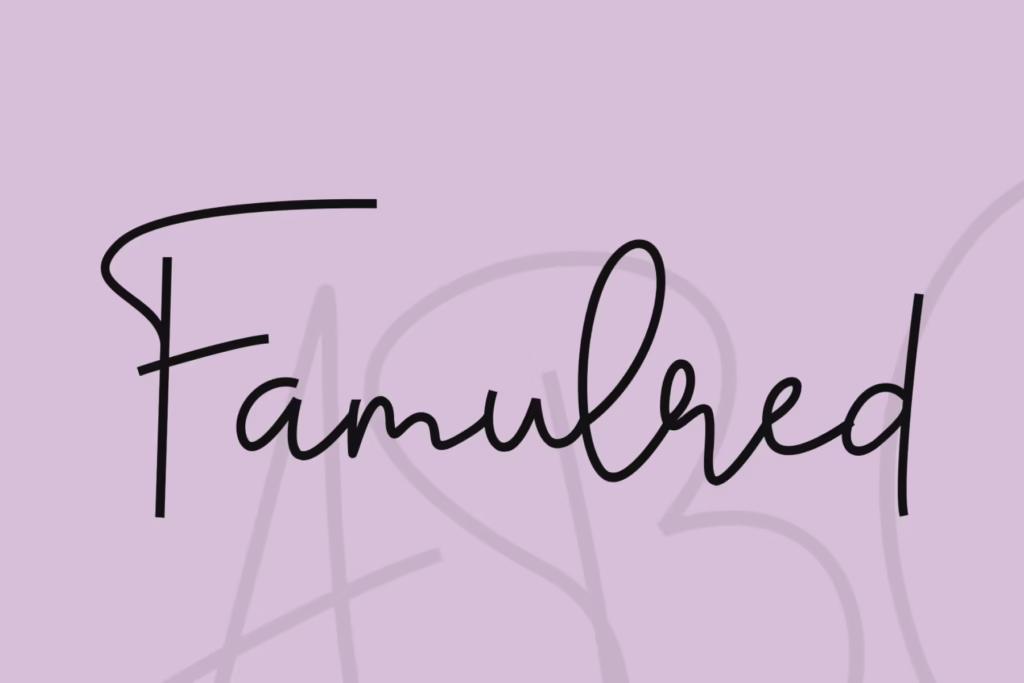
Famulred Font is a script and handwritten typeface that delivers a natural, warm, and expressive writing style. Its flowing strokes and organic letter shapes create a personal and authentic feel, making it well suited for creative projects that need a human touch.
This font works especially well for quotes, branding, logos, invitations, social media posts, packaging, and lifestyle designs. The handwritten character helps designs feel more approachable and emotionally engaging while still remaining clear and readable.
With a personal and commercial use license, Famulred Font can be used freely for both individual and business projects without additional licensing costs. This makes it an excellent choice for designers and creators who want a stylish handwritten script font that is visually appealing, versatile, and legally safe to use.
DownloadRead More : Script Alphabet Fonts for Stunning Creative Designs
Personal Experience Using Freeware Fonts
I have used freeware fonts consistently for more than two years across blog articles, landing pages, presentation slides, and small branding projects. During this time, I gained several practical insights:
- Fonts from well known platforms tend to have better spacing and consistency
- Reading the license file early prevents legal problems later
- Combining two simple freeware fonts often looks more professional than using one decorative font
Based on this experience, I believe freeware fonts are not low quality substitutes. When selected carefully, they can produce results that are visually comparable to premium fonts, especially for digital content.
How to Choose and Use Freeware Fonts Correctly
Step 1: Define the purpose
Decide whether the font will be used for body text, headings, logos, or decorative elements. Each use case requires different font characteristics.
Step 2: Check the license
Always look for clear terms such as free for commercial use or personal use only. If the license is unclear, avoid using the font for business purposes.
Step 3: Test readability
Apply the font to real content at different sizes. Make sure it is easy to read on both desktop and mobile screens.
Step 4: Use fonts consistently
Limit each project to one or two font families to maintain clarity and visual hierarchy.
Trusted sources for freeware fonts include Google Fonts, DaFont, and Font Squirrel. Each platform offers different levels of quality control and licensing clarity.
Read More : Sans Serif Popular Fonts for Modern Design Trends
Risks and Drawbacks of Freeware Fonts
One common risk is license confusion. Some fonts appear free but prohibit commercial usage.
Solution: Always read the license file carefully before using a font in public projects.
Another risk is inconsistent font quality. Some freeware fonts lack proper kerning or multilingual character support.
Solution: Test fonts thoroughly in real layouts before final implementation.
There is also the issue of overused fonts, which can make designs look generic.
Solution: Use thoughtful font pairing, spacing, and layout design to create uniqueness.
Tips to Optimize Freeware Fonts Properly
- Pair fonts strategically, such as one serif with one sans serif
- Adjust line height and letter spacing for better readability
- Limit font weights to improve loading performance
- Test typography on multiple devices and screen sizes
- Use strong color contrast to improve accessibility
Often, how a font is used matters more than which font is chosen. Small typographic adjustments can significantly improve user experience and perceived quality.
Conclusion
Freeware fonts are an excellent choice for creating professional designs without spending money.
With benefits such as cost efficiency, creative flexibility, and easy access, they enable anyone to improve visual communication.
To achieve the best results, always verify licenses, test readability, and apply fonts consistently.
Have you found a freeware font that works perfectly for your projects? Share your experience or explore curated font collections to discover new typography ideas.
Frequently Asked Questions (FAQ)
Are freeware fonts safe to use?
Yes, as long as you follow the license terms and download fonts from reputable sources.
What is the difference between freeware fonts and commercial fonts?
Commercial fonts require payment and usually provide broader usage rights and professional support.
How long does it take to see the impact of freeware fonts?
The impact is immediate. Users notice improvements in readability and design as soon as typography changes.
Who should use freeware fonts?
Freeware fonts are suitable for designers, bloggers, students, startups, educators, and anyone who wants quality typography without high costs.